Key Takeaways
- Indian craftsmanship deserves credit for the generations of knowledge and culture behind it.
- Global brands can turn cultural inspiration into meaningful partnerships with local artisans.
- Cultural credit should appear across campaigns, websites, products, and brand storytelling.
- Creators with genuine cultural connections can bring more authenticity than follower counts alone.
- The strongest cultural marketing stories are built with communities, not simply borrowed from them.
When Culture Becomes Content, Credit Should Come With It
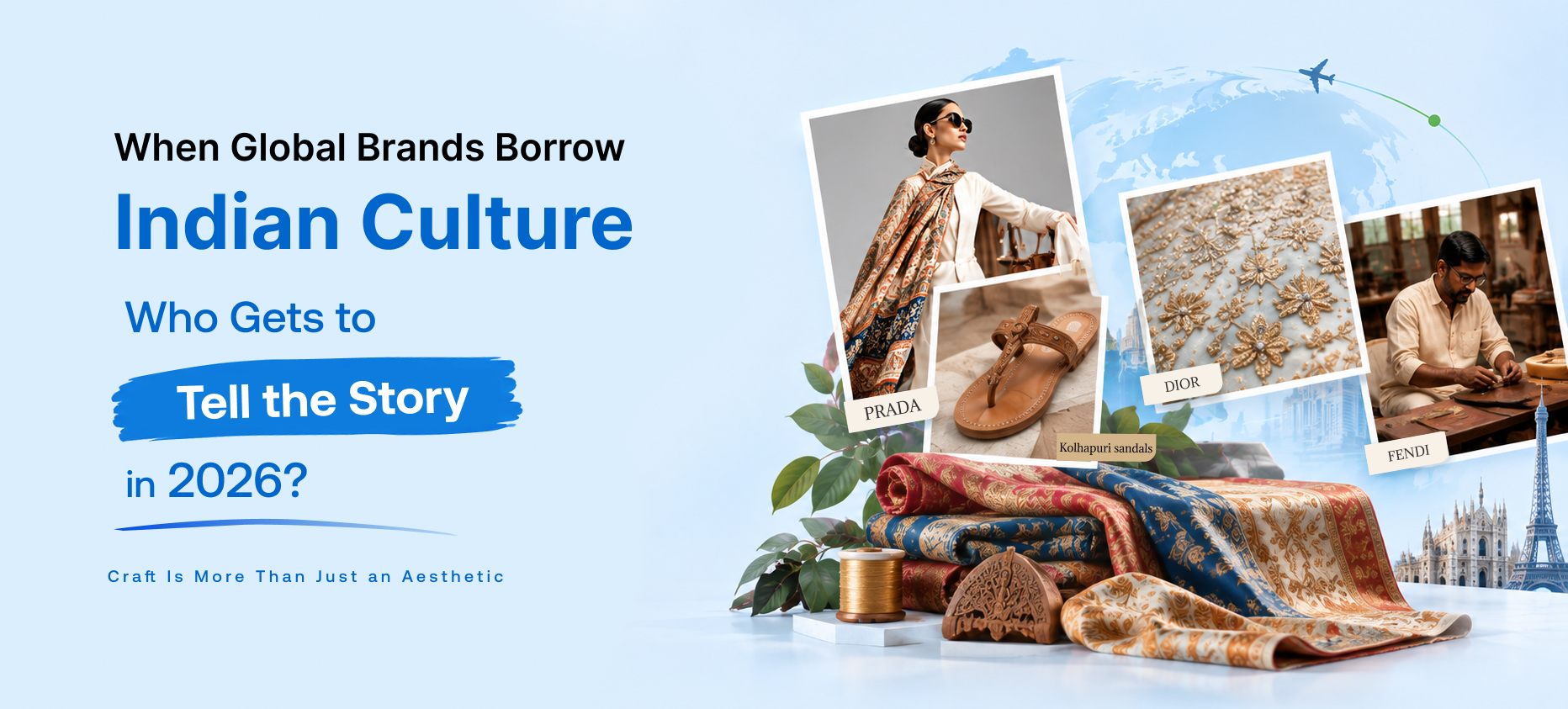
Indian craftsmanship has actually always been a world traveler. Beautiful techniques like zardozi, mukaish embroidery, intricate leatherwork, and handloom fabrics have crossed borders for centuries. Today, you see them all over the global fashion stage—from Prada’s take on Kolhapuri sandals to Dior’s embroidery work and Fendi’s collaboration with Mumbai artisans. It’s exciting to see Indian artistry get global love! But it also brings up an important question: When our culture reaches an international audience, does the story of where it came from travel with it?
Craft Is More Than Just an Aesthetic
It’s super easy for big brands to treat traditional crafts as just a “cool look.” A centuries-old embroidery style becomes a background texture, or a classic regional sandal becomes a trendy runway silhouette. But behind every traditional technique, there’s a whole living, breathing community:
- Generations of Skill: Master artisans who spend decades learning and perfecting their craft from their parents and grandparents.
- A Sense of Place: Local hubs—like the leather artisans in Maharashtra or handloom weavers in Varanasi—whose regional materials and traditions make the craft special.
- Legal Protections: Many of these crafts carry Geographical Indication (GI) tags. Think of a GI tag as an official stamp that protects traditional artists from having their heritage copied without credit or fair compensation.
A brand might design a dress in a few weeks, but the knowledge behind it took generations to build. That history is a huge part of what makes the piece valuable!
Real-World Examples: What Luxury Brands Taught Us

Two famous fashion houses give us a great look at how cultural credit works in the real world:
The Prada Story
When Prada introduced sandals that looked almost identical to classic Kolhapuri chappals, the initial design didn’t mention its Indian roots. That sparked a big conversation online about cultural credit and traditional artisan rights. Prada listened and shifted their approach by partnering directly with artisans in Maharashtra and Karnataka to manufacture products and launching training programs to support local communities. It was a great example of moving from just taking “inspiration” to building a real partnership.
The Fendi Story
Fendi has worked with the talented folks at Mumbai’s Chanakya Atelier for years, even featuring the artisans in beautiful promotional videos. However, when customers looked at the actual product pages online, the mention of Indian craftsmanship was missing.
The Takeaway: Giving credit can’t just be something a brand does in a fancy PR video. If the story disappears from the website or online shop, buyers miss out on the amazing history behind what they’re buying.
What This Means for Everyday Creator & Brand Marketing

This disconnect isn’t just happening on luxury runways—it happens in everyday digital marketing, too! When agencies plan campaigns around cultural events or regional styles, it’s easy to treat culture like a fun prop instead of a meaningful story.
Here’s how brands and creators can do better:
- Pick Authentic Voices Over Huge Numbers: Instead of picking creators just because they have millions of followers, look for genuine cultural connections. A creator from Maharashtra sharing the real story of Kolhapuri leatherwork, or a Kolkata creator talking about what Durga Puja truly means to them, brings real heart to a campaign.
- Tell the Whole Story: Give creators space to explain the “why” and “how” behind a tradition instead of just handing them a standard sales script.
- Focus on Co-Creation: Work with people who live the culture every day, rather than just borrowing their traditions for a quick photo.
Building Stories Together
At the end of the day, great marketing isn’t about borrowing someone’s culture for a trend. It’s about building authentic stories with the people who keep those traditions alive. When Indian craftsmanship travels from a small artisan workshop to the global stage, the real magic isn’t just the final product. It’s the full journey: connecting traditional skills with modern design and bringing artisan communities and global audiences closer together!