Key Takeaways
- One-time influencer campaigns are ideal for launches, festive promotions, regional testing, and other time-sensitive marketing goals.
- Long-term creator partnerships build deeper trust, stronger product understanding, and sustained audience consideration.
- Creative learning becomes a major advantage of ongoing partnerships as creators and brands continuously improve their content together.
- Performance data from one-time campaigns can help brands identify the right creators, audiences, and content formats before making longer commitments.
- A hybrid strategy can deliver the best results by testing creators through short-term campaigns and turning proven performers into long-term brand advocates.
One-Time Reach or Long-Term Trust: Choosing the Right Creator Strategy
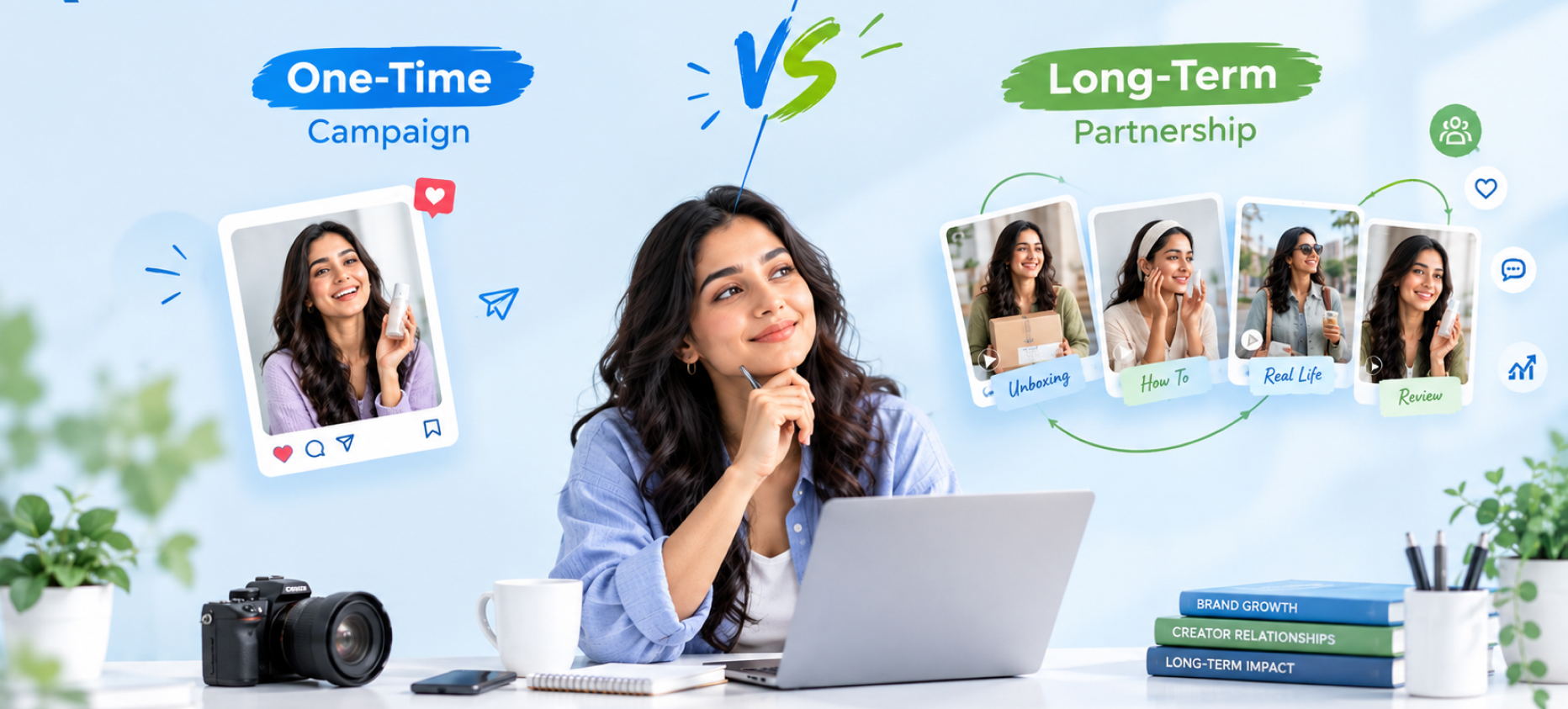
A creator posts about your brand today. What happens tomorrow? This question is becoming increasingly critical in modern influencer marketing. A one-time influencer campaign can put a product in front of the right audience at the right moment. However, a long-term creator partnership gives that creator enough time to deeply understand your brand, product gradations, and the specific audience they are speaking to.
A new product launch may demand an immediate burst of creator content. Conversely, a skincare or technology brand often requires repeated consumer education before prospective buyers feel comfortable making a decision. Meanwhile, a regional brand entering a new city might first want to test which creators actually resonate with local audiences.
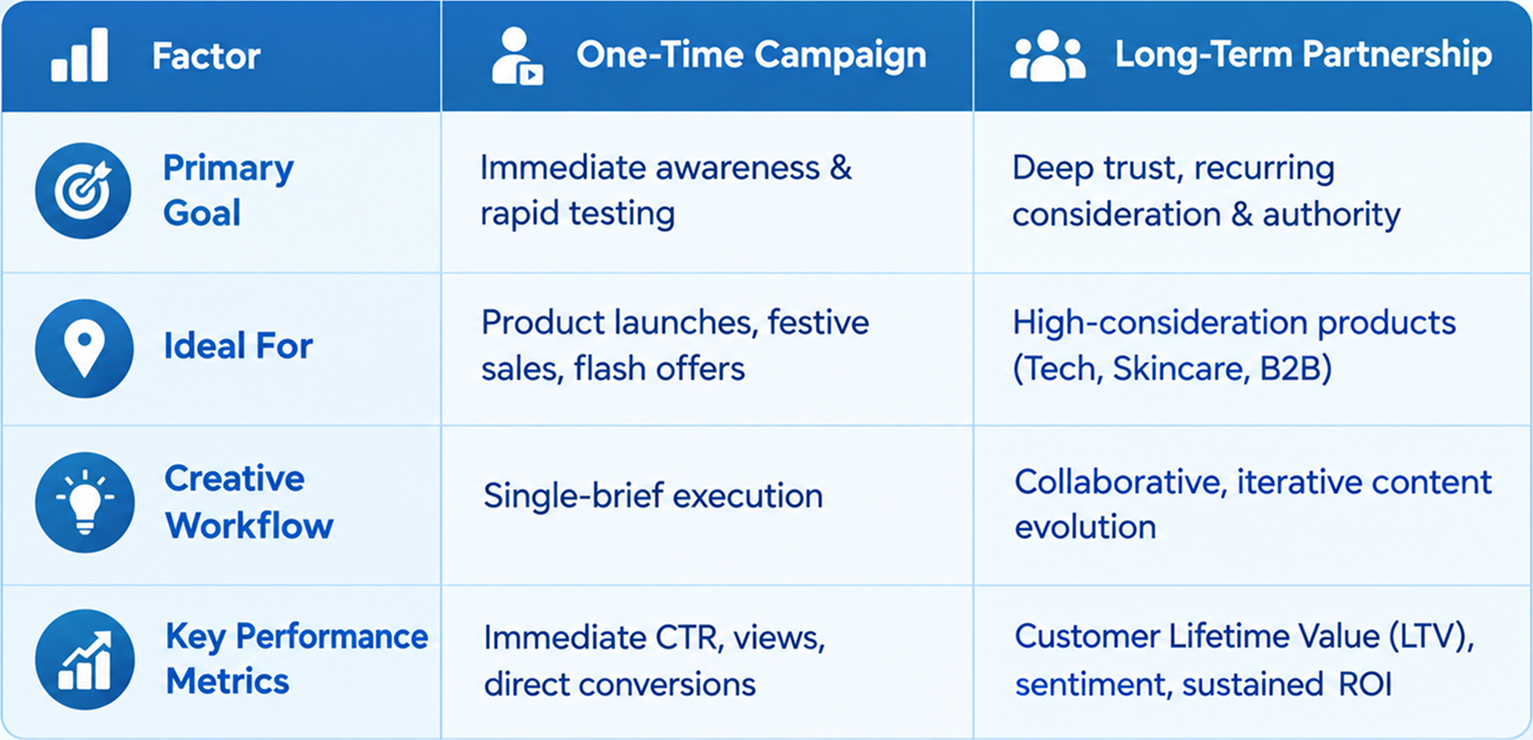
A Quick Comparison
What Does a One-Time Influencer Campaign Accomplish?
A one-time campaign is built around a defined, time-sensitive activation:
- Product launches
- Festive promotions
- Store openings and events
- Flash sales and announcements
- Short-term brand awareness pushes
With this model, a brand can collaborate with different creators across multiple campaigns, experiment with diverse content styles, and adjust its creator mix without committing to an extended relationship. This makes one-time campaigns particularly effective when the marketing objective itself has a short shelf life.
Real-World Applications
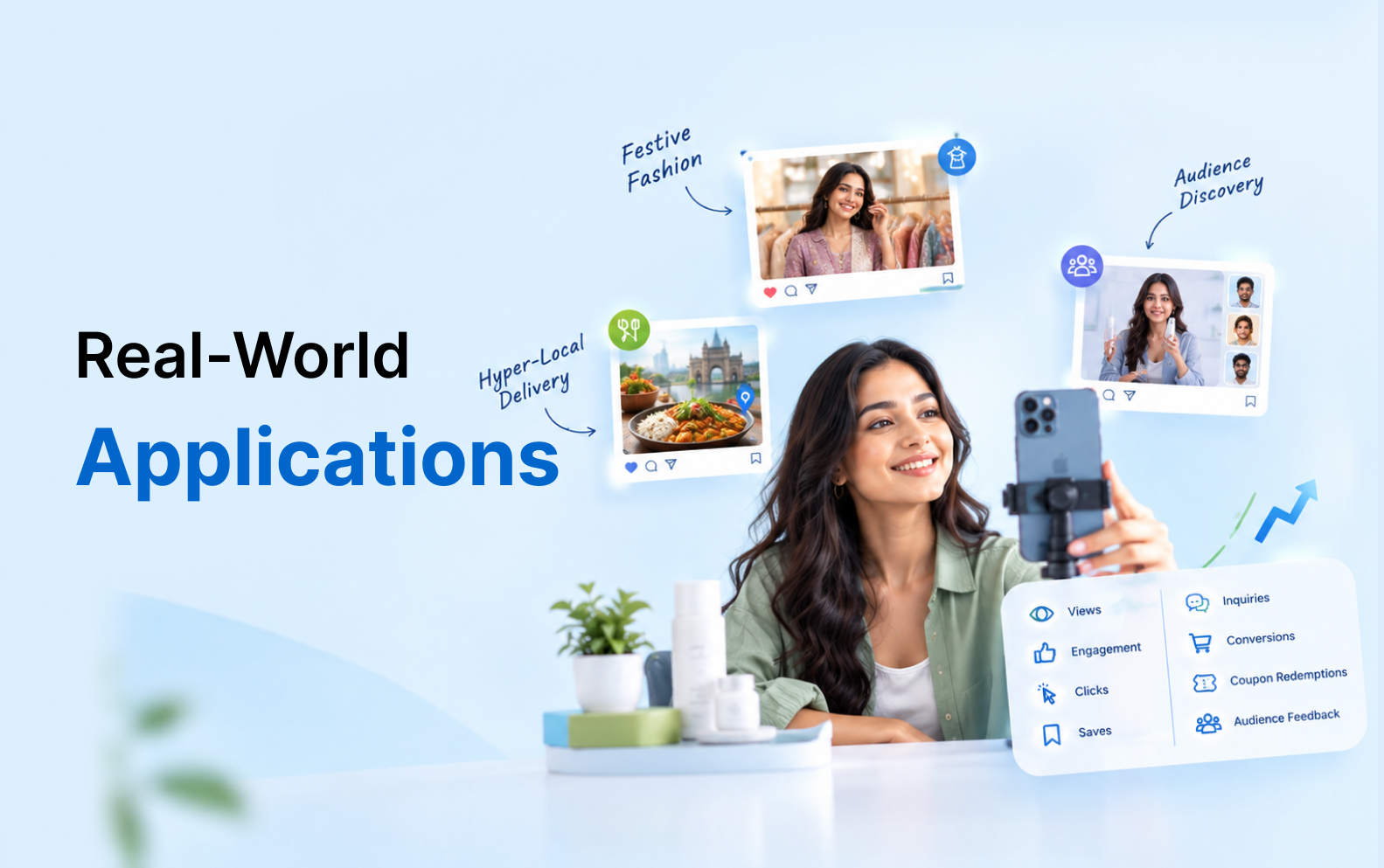
- Festive Fashion: A fashion brand launching a seasonal collection needs creators to publish content within a strict two-week promotional window.
- Hyper-Local Delivery: A food-delivery platform promoting a regional festival requires creators localized to specific cities during that timeframe.
- Audience Discovery: A brand launching a new product category can deploy multiple creators to quickly identify which demographic segments respond best to the value proposition.
Beyond immediate reach, the campaign generates vital performance signals: views, engagement, clicks, saves, inquiries, conversions, coupon redemptions, and qualitative audience feedback. These signals provide actionable data to optimize future marketing initiatives—functioning as a market test as much as a media activation.
Where Do Long-Term Creator Partnerships Excel?
Long-term partnerships operate on a fundamentally different dynamic: the creator isn’t only appearing when the brand has something to sell. Instead, the creator becomes an ongoing part of the brand’s recurring content ecosystem.
Rather than relying on a single sponsored video, the relationship encompasses:
- In-depth product education and tutorials
- Seasonal updates and honest long-term reviews
- Unboxing experiences and event participation
- Subtle, ongoing brand mentions across several months
In an ongoing model, brands can measure performance across multiple activations rather than judging a creator’s value on a single post.
The initial collaboration establishes baseline product awareness; subsequent content answers viewer questions; and later posts demonstrate real-world use cases or introduce complementary product lines. This approach is essential for high-consideration categories where consumers rarely purchase after seeing a single ad.
Creative Learning is The Hidden Advantage
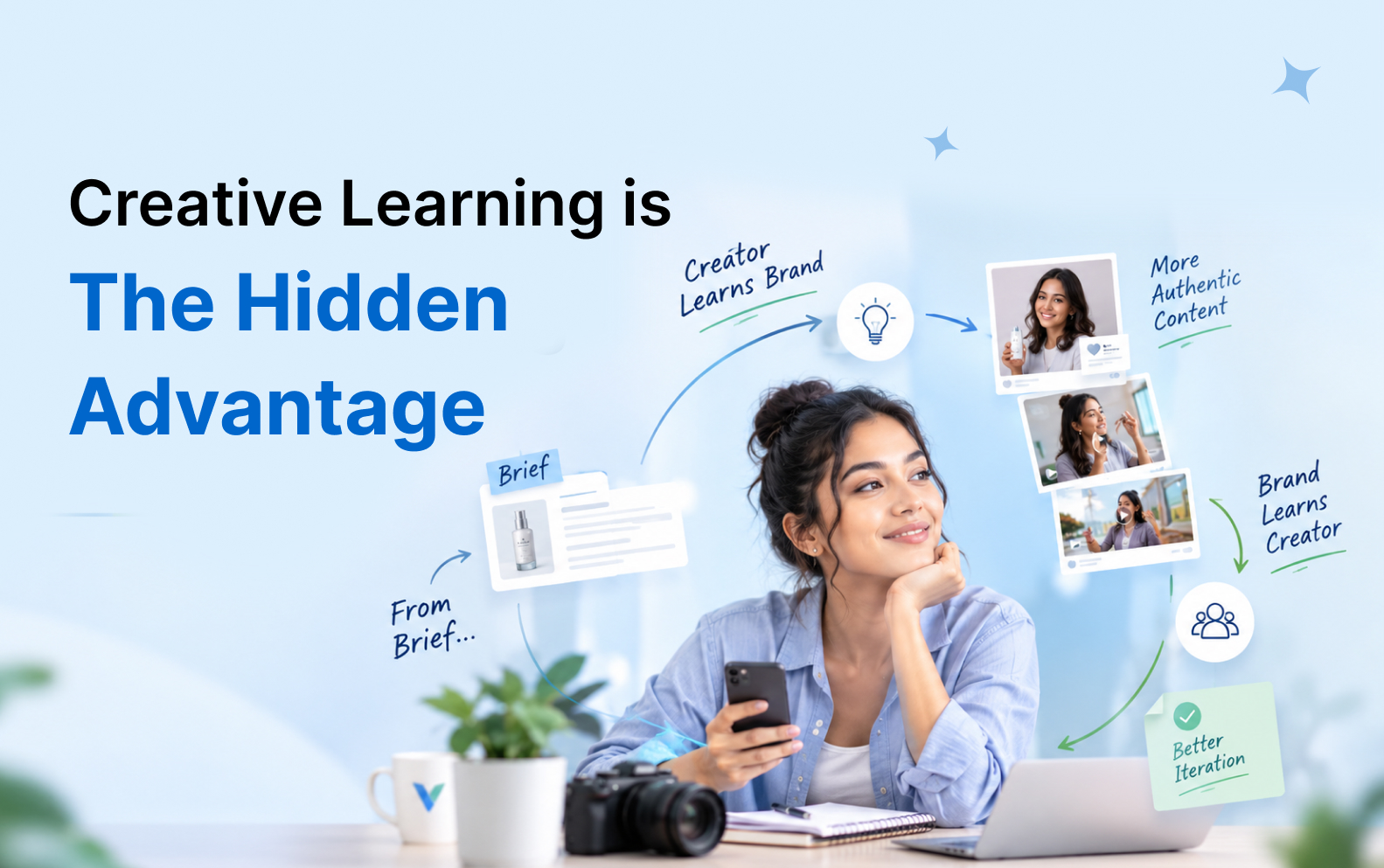
Creative alignment is one of the most underappreciated differences between these two strategies. In a single-activation campaign, a creator’s brand knowledge is transactional. They receive a brief, review the specs, and execute the content.
In a long-term partnership, the creator gradually absorbs the brand’s tone, product nuances, common customer objections, and creative boundaries. Simultaneously, the brand learns how that creator naturally communicates with their audience, creating a feedback loop for better iteration.
Instead of explaining the brand from scratch with every campaign, future briefs build on what the audience already knows. Long-term partnerships yield the highest return when creators are granted the creative freedom to seamlessly blend your product into their established content style.
Choosing the Right Model
To select the right strategy, align your choice with your immediate marketing objectives.
Choose a One-Time Campaign when:
- You are launching a campaign with a firm deadline or event constraint.
- You need to test an unproven audience segment or creator niche.
- You are expanding into a new geographic or regional market.
- Your goal requires rapid creative experimentation across multiple formats.
Transition to a Long-Term Partnership when:
- Your product requires repeated education, consideration, or proof.
- You want trusted creators to become recurring brand advocates.
- You have validated creators whose audience mirrors your ideal customer profile.
- You want to systematically build a library of reusable user-generated content (UGC).
- You need multi-touch performance data to accurately measure customer acquisition.
The Hybrid Approach
These two models do not have to be equally exclusive. The most efficient influencer strategies use a hybrid funnel: start with short-term, one-time campaigns to test creator fit, evaluate audience relevance, and measure conversion signals. Then, roll high-performing creators into ongoing, long-term partnerships to scale your brand authority over time.