Key Takeaways
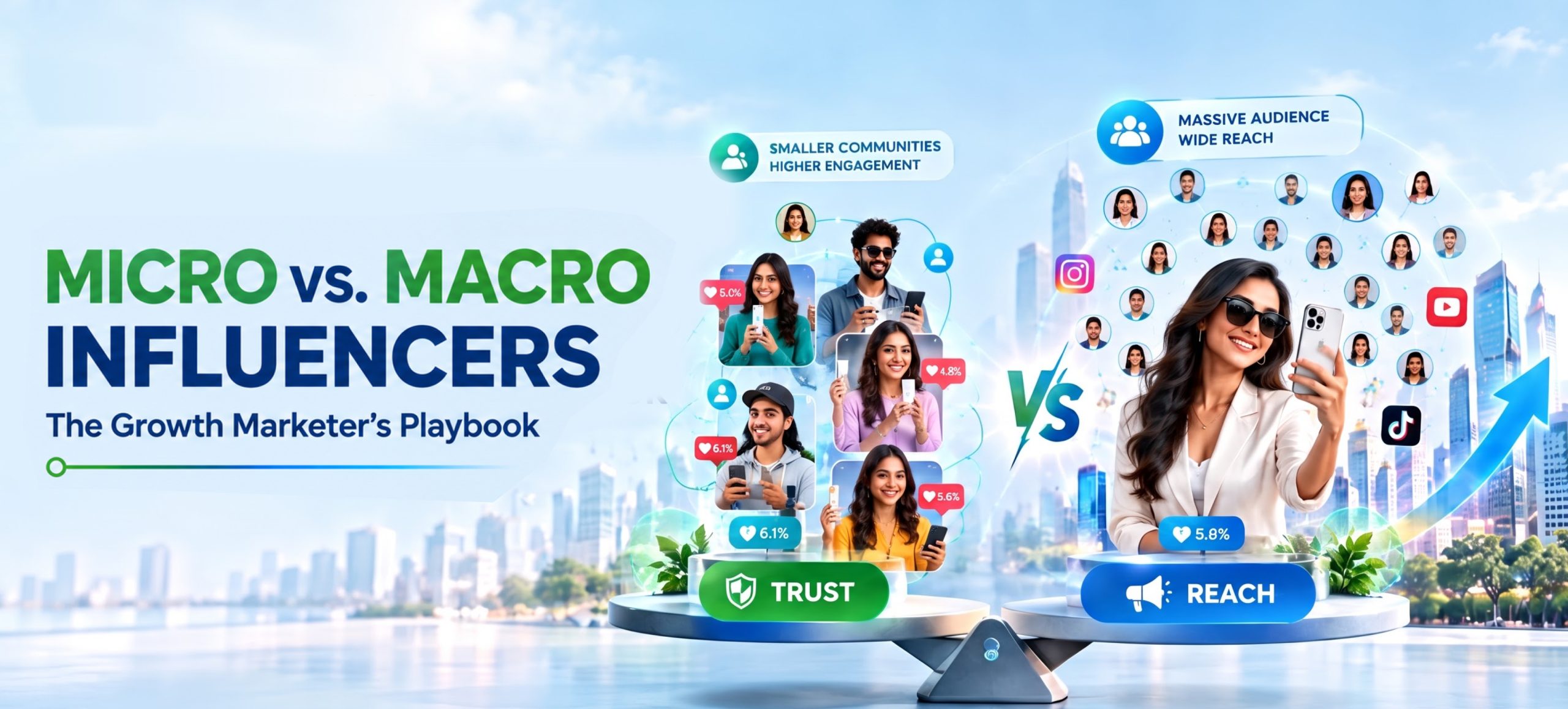
- Micro influencers build trust, engagement, and conversions.
- Macro influencers deliver reach, visibility, and brand awareness.
- Choose creators based on your campaign goals.
- Diversifying creators can reduce campaign risk.
- A balanced creator mix can maximize campaign impact.
Micro vs. Macro Influencers: How to Choose the Right Creator for Growth
Influencer marketing isn’t a side tactic anymore; it’s a primary revenue engine. As paid ad costs skyrocket, creators are filling the trust gap and driving actual customer acquisition. But winning here comes down to one decisive fork in the road: Micro vs. Macro. Neither is a silver bullet; both have their own set of advantages. Success depends on matching the right creator tier to your specific revenue targets, budget, and audience.
Creator Tiers: Performance & Economics Benchmark
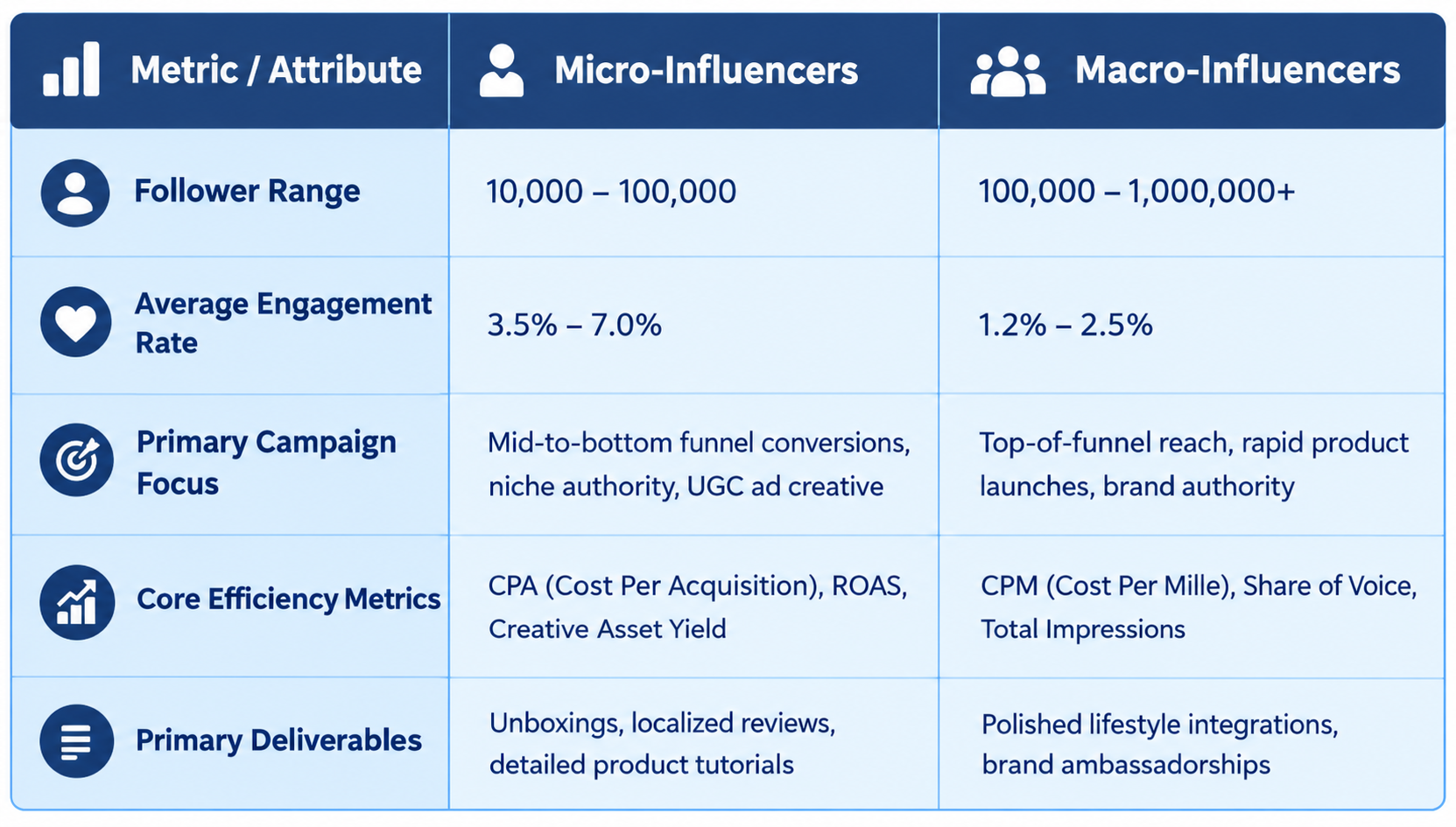
Before committing budget, evaluate how each tier operates across core efficiency metrics:
Micro-Influencers: High Trust, Regional Nuance, and Lower CAC
Micro-influencers function as trusted peers within dedicated communities. In culturally and linguistically diverse markets—such as India, where consumer sentiment shifts dramatically between tier-1 hubs like Mumbai and regional markets like Jaipur, Kochi, or Kolkata—micro-creators bridge localized trust gaps that broad campaigns cannot reach.
Strategic Advantages
- Obsessed Audiences & High Conversions: High engagement rates ($3.5\% – 7.0\%$) mean recommendations carry the weight of word-of-mouth advice from a friend.
- High-Yield Asset Engine for Paid Ads: The greatest enterprise value of micro-creators is ad asset generation. Licensing authentic micro-influencer content for Meta Partnership Ads or TikTok Spark Ads frequently cuts CAC by 30% to 50% compared to polished, in-house studio ads.
- Risk Diversification: Allocating budget across 10–15 creators shields your campaign from creative failure, ensuring steady baseline conversion volume.
Operational Trade-Offs
- High Management Overhead: Campaign scaling requires coordinating briefs, contract approvals, product shipping, and content usage rights across multiple creators simultaneously.
- Variable Production Quality: Deliverables and deadline adherence can vary widely, requiring clear creative guidelines and active supervision.
Macro-Influencers: Immediate Scale and Market Authority
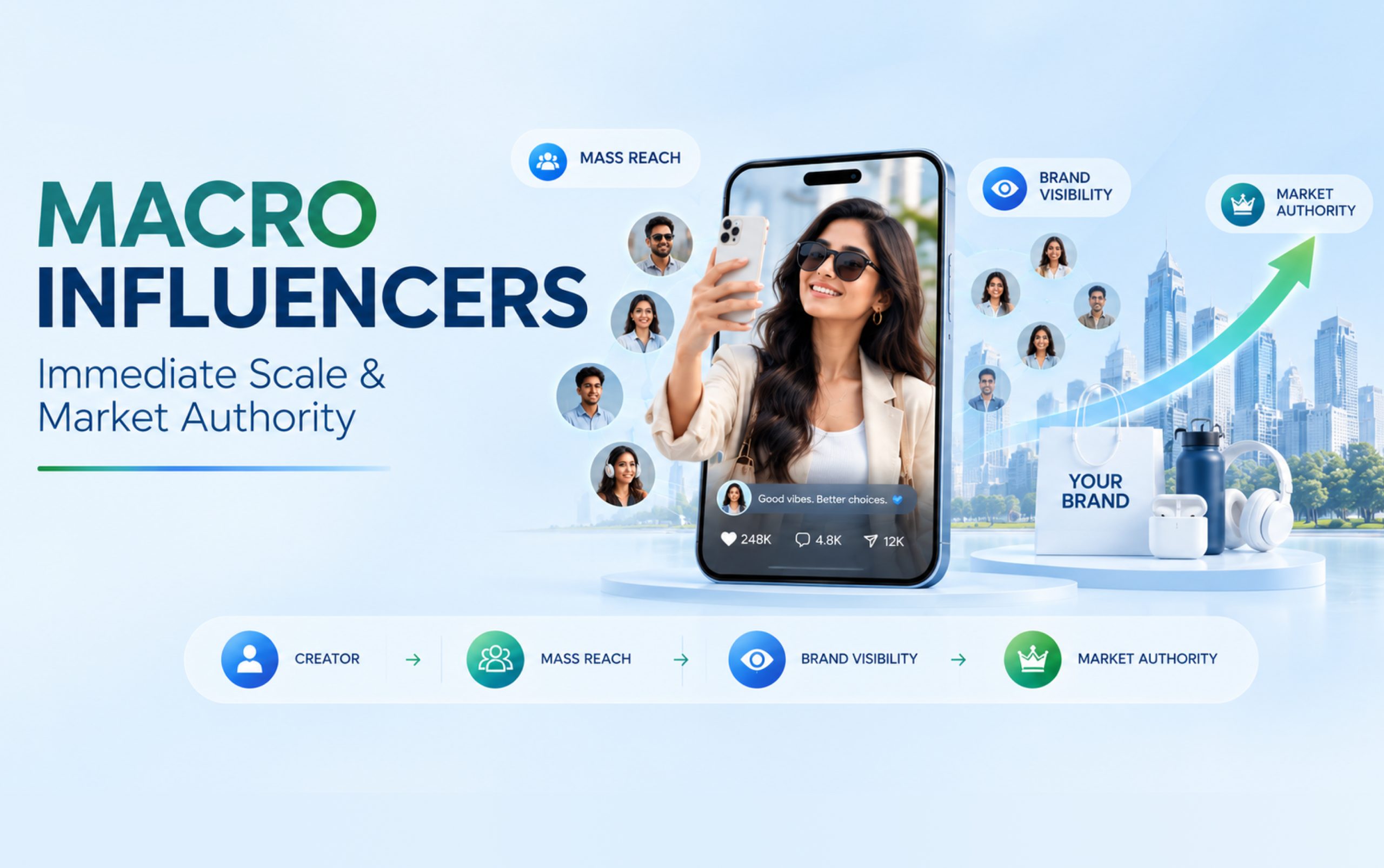
When a brand needs to establish immediate category dominance, support a nationwide launch, or build instant brand equity, macro-influencers deliver massive distribution at speed.
Strategic Advantages
- Instant Mass Distribution: A single campaign drops your product in front of hundreds of thousands of active viewers within hours, sparking immediate top-of-funnel search intent.
- Brand Equity & Retail Leverage: Endorsements from recognized digital figures elevate brand perception, creating immediate leverage when negotiating retail placement, press coverage, or agency partnerships.
- Low Operational Friction: Managing 1 or 2 high-profile deals requires significantly less administrative capacity than herding dozens of micro-creators.
Operational Trade-Offs
- Capital Risk: Premium flat fees create upfront financial risk if the creator’s audience fails to take action.
- Passive Viewership: Broader follower bases result in lower percentage-based engagement and weaker community intimacy.
Strategic Decision Framework
1. Goal Alignment
- Deploy Micro-Influencers: When targeting lower CAC, building localized regional trust, generating authentic UGC for performance ad pipelines, or driving direct e-commerce sales.
- Deploy Macro-Influencers: When anchoring a major product release, entering a new mass market, or seeking immediate category prestige.
2. Capital Allocation Models
- Budget < $10,000 / month (100% Micro Allocation): Partner with 10–15 micro-creators. This spreads creative risk, tests multiple messaging angles, and builds a sustainable performance ad asset library.
- Budget $50,000+ / month (Hybrid Portfolio Allocation): Allocate 60–70% of funds to micro-creators for regional conversion depth and paid media assets. Direct the remaining 30–40% toward 1–2 macro-creators to serve as high-visibility campaign anchors.
3. Product Consideration Level
- High-Consideration Purchases: Specialized skincare, fintech tools, or B2B platforms require deep audience trust, detailed breakdowns, and authentic social proof—where micro-influencers excel.
- Impulse & Lifestyle Buys: Fashion apparel, trendy consumer gadgets, or fast-moving packaged goods thrive on the instant visual impact macro-influencers provide.
Real-World ROI Scenario: $20k Campaign Spend
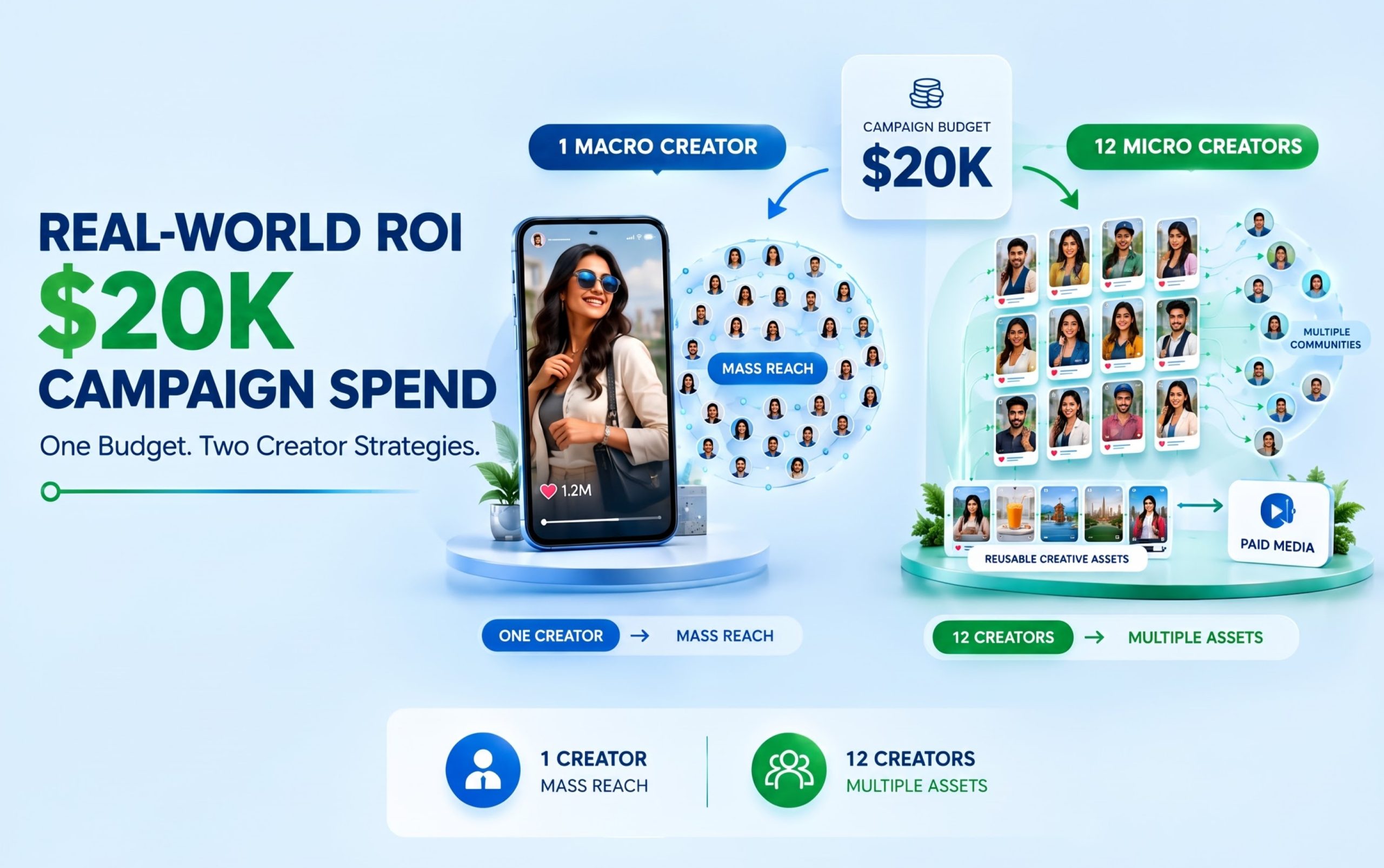
Consider a D2C skincare brand launching a specialized Vitamin C serum with a $20,000 budget:
Strategy A (100% Macro Allocation): The brand spends $20,000 on a single sponsored Instagram Reel with a macro-creator (800k followers). The reel gets 300k views and creates a brief 48-hour traffic surge. Once the algorithm cools down, the brand is left with a single creative asset and no long-term retargeting leverage.
Strategy B (Diversified Micro Portfolio): The brand divides the $20,000 across 12 micro-creators (20k–50k followers) in key regional demographics. This yields 12 distinct video reviews in multiple languages, localized community discussions, and 12 licensed video assets that the growth team can deploy as paid Meta Partnership Ads for 90 days.
Creator Screening Protocol
Run every prospective creator through this four-step verification process before finalizing contracts:
- Audience Authenticity Audit: Review growth charts using analytics tools. Sudden vertical follower spikes often flag purchased bot accounts.
- Comment-to-Like Quality Ratio: Verify that comment sections contain genuine audience questions and dialogue rather than automated emoji spam.
- Usage & Whitelisting Rights: Ensure ad usage rights (Spark Ads / Partnership Ads) are secured in writing for at least 30 to 90 days post-campaign.
- Competitor Exclusivity: Require a minimum 30-day non-compete clause in the specific product category before and after the scheduled postdate.
Good Luck!