Key Takeaways
- Parks are “Live Marketing Systems”: Disney meticulously designs every detail to maintain total thematic consistency.
- Emotional Storytelling & Nostalgia: Disney leverages cross-generational nostalgia to bridge age gaps.
- Immersive Experience over Thrill Rides: Disney transforms its intellectual properties (Star Wars, Frozen, Beauty and the Beast) into living, walk-in storybooks.
- User-Generated Social Media Marketing: By creating highly photogenic moments, Disney prompts visitors to post content naturally.
- Global Benchmark for Customer Experience: Disney’s approach to experience design, employee engagement, and customer service is precisely refined.
Amusement parks generally sell rides, but Disney Parks sells stories
Disney Parks are the happiest place on earth and are also remarkable from a branding perspective. We can call it one of the world’s most urbane live marketing systems. Every path, soundtrack, scent, costume, and interaction has been deliberately designed to emphasize the Disney magic. The moment you enter any of the Disney Parks, you are wrapped in a magical experience of branding and storytelling.
Main Street, U.S.A., Frontierland, Adventureland, Tomorrowland, and Fantasyland were designed with their own architecture, music, colors, and emotional tone. This thematic consistency remains a defining feature of Disney Parks today. This is why Disneyland could raise the ticket price to a huge extent over the years, yet see an exponential escalation in the number of visitors.
Disney Parks have become a case study for business schools, customer experience experts, and brand strategists worldwide. The Disney Institute teaches organizations how Disney’s approaches to service, employee engagement, and experience design can be adapted to other industries. The parks function as a “living laboratory” for branding and customer experience excellence.
Disney’s Unique Marketing Strategies
‘Nostalgia’ – Letting Guests Step Inside the Story
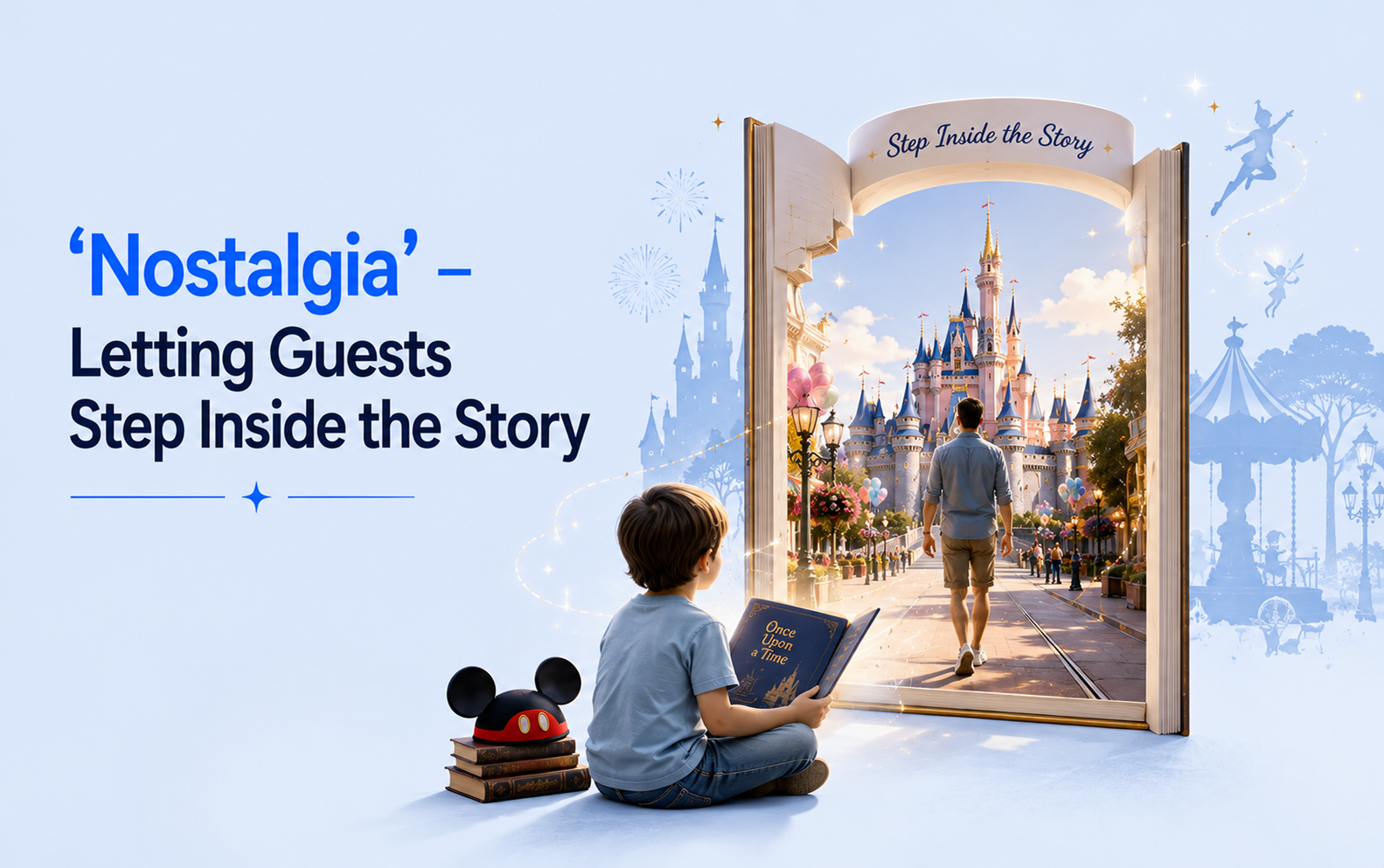
Disney excels at bringing classic stories back to life by transforming animated films into live-action adaptations with a modern twist. The older and younger generations experience the magic in a fresh yet familiar way. Movies such as Beauty and the Beast allow adults to reconnect with their childhood memories while introducing the story to the new generation. The 2017 live-action remake earned over US$1.2 billion worldwide, proving that emotional storytelling has immense commercial power. It’s about mixing nostalgia with a timeless message about valuing inner beauty in the live-action adaptation of the classic tale. Disney’s marketing formula evokes strong emotions that help audiences rediscover the joy, wonder, and imagination.
Brand That Feels Like Magic – Building a Unique Identity
Disney has mastered this art of creating a feeling that people instantly recognize better than any other. For decades, it has built a brand identity centered on family, happiness, imagination, and shared experiences for people of all ages. This identity is very clearly seen in the Disneyland Resort. From thrilling roller coasters and colorful parades to spectacular fireworks, themed food, and the chance to meet their favorite characters, every detail is designed to immerse visitors in a world of imagination.
Disney’s Immersive Storytelling
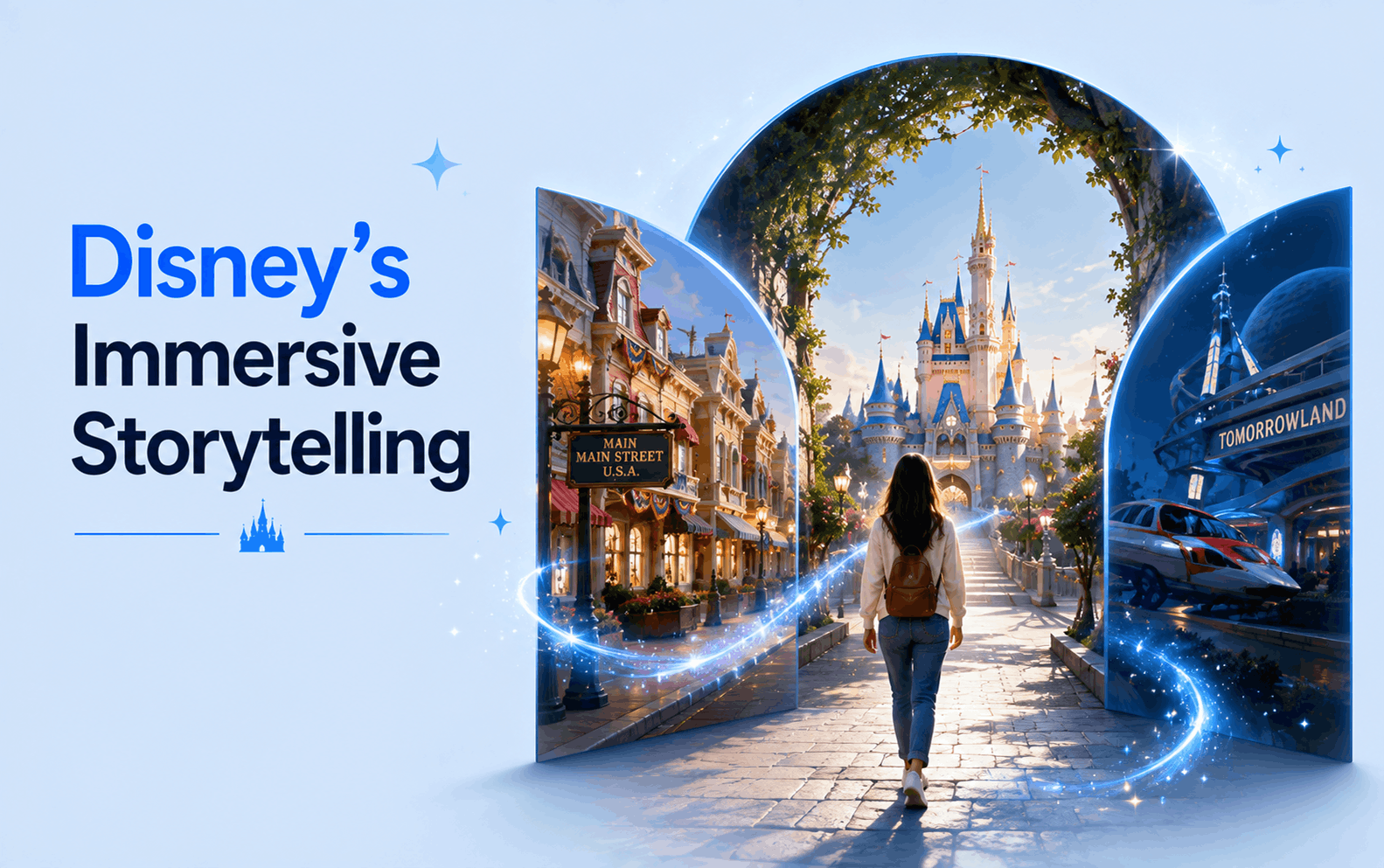
Disney Parks are like living storybooks, where rides are not the sole attraction. They take their guests inside interesting stories like Frozen, Star Wars, Pirates of the Caribbean or Beauty and the Beast. Other entertainment brands fail to offer such emotional immersion.
Others might offer thrilling rides or impressive technology, but none can create the emotional immersion Disney offers. They transform stories into fully immersive environments, turning a park visit into a memorable adventure that guests cherish for a lifetime.
Iconic Characters – Branding Wears a Mickey Hat
Such powerful characters allow Disney to maintain cross-generational loyalty. Disney’s strongest branding asset is its unique collection of more than 800 characters that connect with multiple generations. Characters such as Mickey Mouse, Minnie Mouse, Donald Duck, and Disney princesses are powerful brand assets. Such powerful characters allow Disney to maintain cross-generational loyalty. We all love Mickey Mouse, who first appeared in 1928 and still remains one of the most recognizable in the world and has become a Disney symbol itself.
Social Media – A Powerful Branding Tool
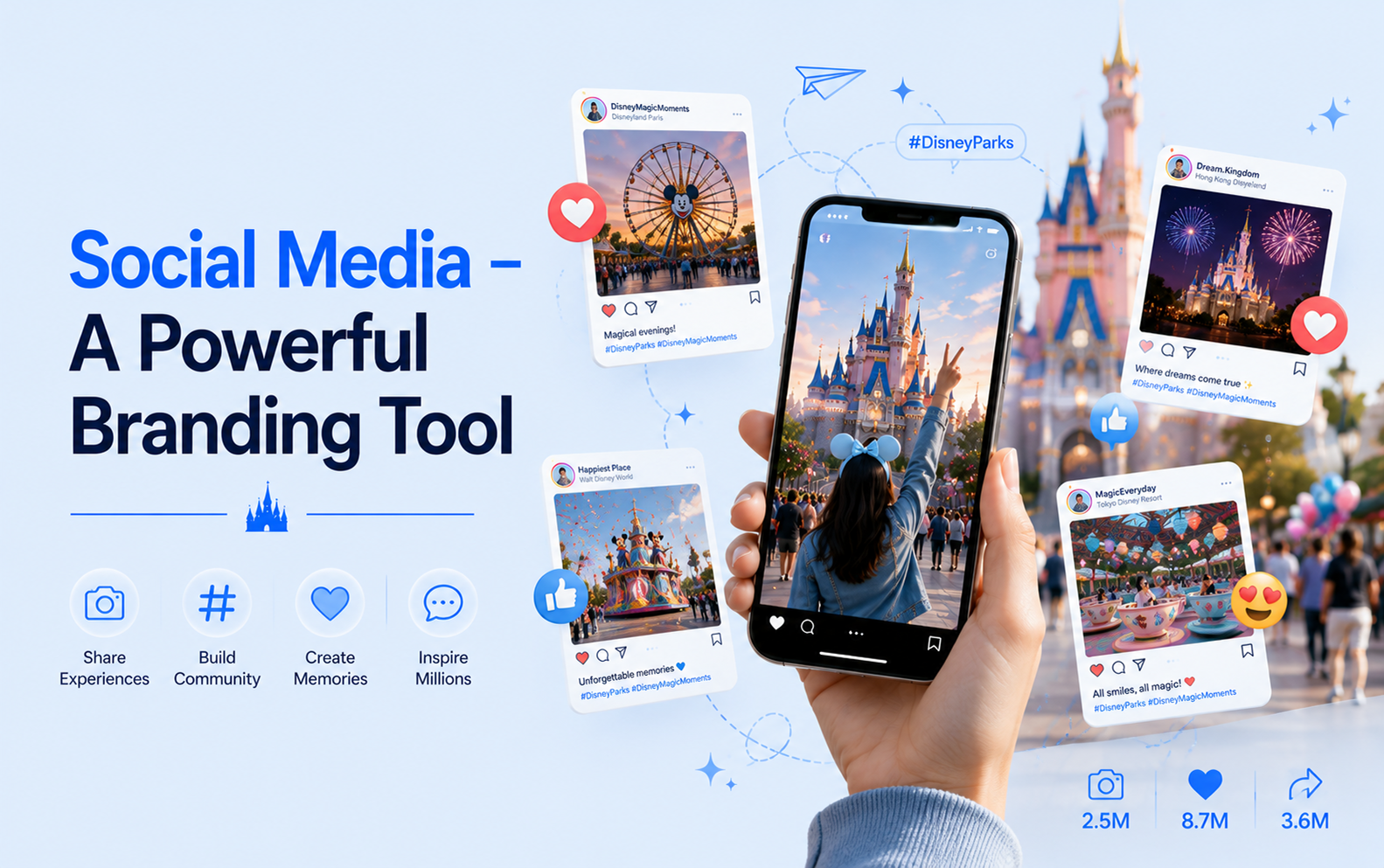
Disney Parks do not use social media just to sell tickets or advertise rides. They use it to extend the Disney experience beyond the park gates so that audiences stay connected to the brand every day.
Disney designs visually stunning experiences—castle fireworks, character meet-and-greets, themed food, and parades—that encourage visitors to take photos and videos. When guests post these moments on Instagram, TikTok, Facebook, or X, they become Disney’s free brand ambassadors.
Campaigns built around hashtags such as #DisneyParks, #DisneyMagicMoments, and #Disneyland motivate guests to share their own experiences. User-generated content adds authenticity because people trust real visitors more than just advertisements.
Disney actively replies to comments, shares fan content, celebrates birthdays and milestones, and participates in trending conversations. This two-way interaction makes followers feel valued, helping build a strong global Disney fan community.
Disney’s Brand Lives in People’s Hearts
Disney Parks are not viewed as mere amusement parks. They are places where stories come to life and memories become a lifelong companion. That ability to transform entertainment into an emotional, immersive, and shareable experience makes Disney’s branding truly exceptional.