Key Takeaways
- Experiences beat advertisements as people forget ads quickly, but interactive AR/VR experiences create stronger emotional connections and lasting memories.
- Spatial computing allows brands to bring products and experiences directly into customers’ everyday environments.
- Immersive marketing drives results. The success stories of Sephora and Ulta Beauty show that immersive experiences can directly impact customer behavior.
- Brands like Tiffany & Co. are using immersive experiences to create memorable moments rather than focusing solely on sales.
- The future belongs to brands that engage consumers through interactive experiences rather than traditional advertising.
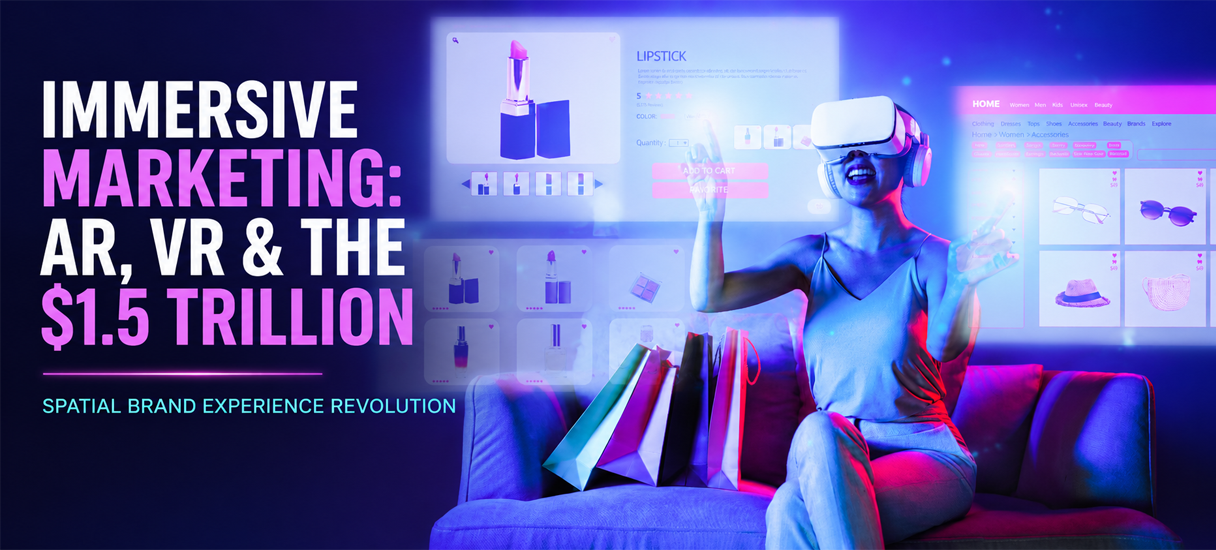
For decades, marketers fought for attention on television, websites and social media feeds. Today, a new frontier is emerging: spatial computing lets brands place experiences directly into consumers’ physical environments through Augmented Reality (AR), Virtual Reality (VR) and Spatial Computing. This shift is one of the largest opportunities of the next decade, as digital and physical worlds converge.
Spatial computing combines AR, VR, AI and real-time 3D environments to blend digital content with the physical world. Instead of simply seeing an advertisement, consumers can interact with products, walk through virtual stores, try on items digitally or participate in immersive brand stories.
Analysts believe the broader spatial computing ecosystem could unlock economic opportunities worth over $1.5 trillion, fundamentally reshaping commerce, entertainment, retail, tourism and brand engagement. This matters because experiences are remembered far longer than advertisements.
Consumers scroll through thousands of marketing messages every day. Most disappear within seconds. But when a customer can virtually test a product, explore a branded world or interact with a digital experience, the emotional connection becomes far stronger, showing why immersive marketing matters.
Sephora: Turning Makeup Into an Experience
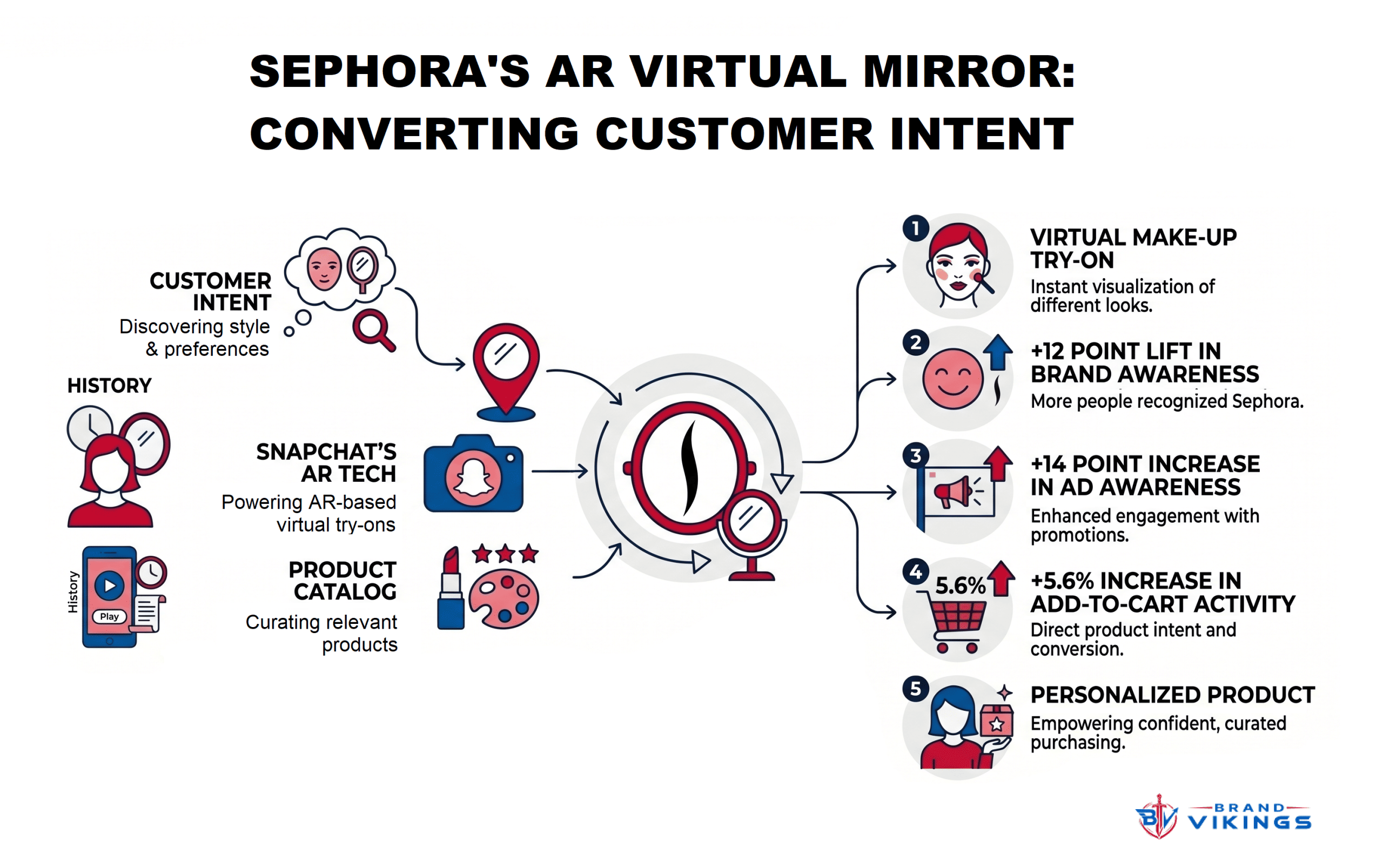
Sephora understood something many brands missed. People don’t want to buy makeup; they want to know how they’ll look wearing it. So, using Snapchat’s AR technology, Sephora allowed customers to virtually try products before purchase. The results were impressive: a 12-point lift in brand awareness, a 14-point increase in ad awareness, and a 5.6% increase in add-to-cart activity. Instead of showing consumers an advertisement, Sephora handed them a virtual mirror.
Ulta Beauty’s 30 Million Product Trials
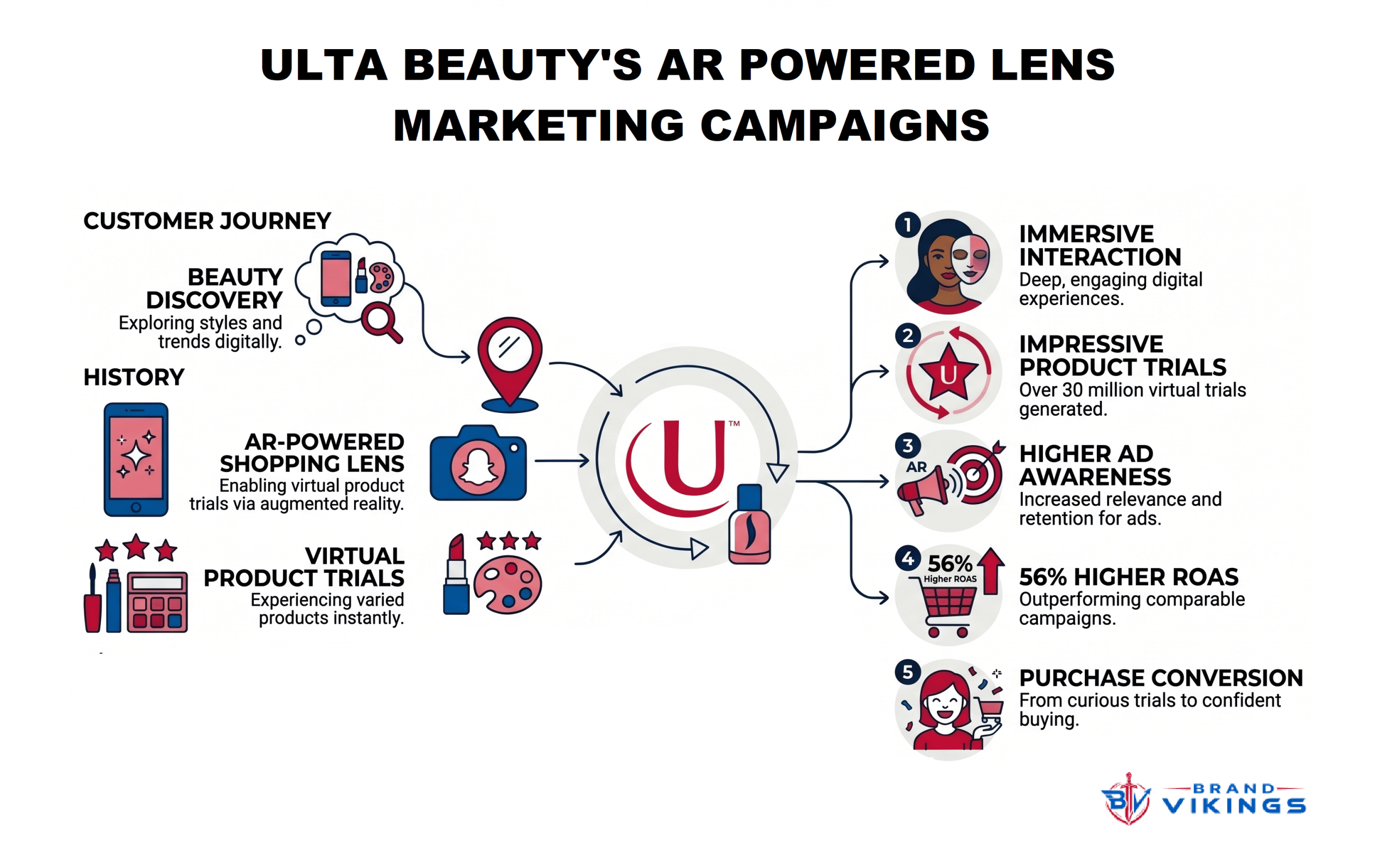
Imagine convincing millions of people to test your products without sending a single sample. Ulta Beauty achieved exactly that. Its AR-powered Shopping Lens campaign enabled customers to experiment with beauty products digitally, generating more than 30 million virtual product trials and delivering 56% higher return on ad spend than comparable lens campaigns.
In traditional marketing, curiosity often ends with a click. In immersive marketing, curiosity becomes interaction, and interaction drives purchases.
Luxury Brands Are Entering the Spatial Era
Luxury brands are also embracing immersive experiences. Tiffany & Co. introduced an AR-powered activation at the US Open, enabling visitors to interact with digital luxury objects and share their experiences on social media. In doing so, Tiffany transformed its brand into an experience worth talking about, rather than selling jewelry directly.
The question for marketers is no longer, “How do we get consumers to our content?” Instead, it’s becoming, “How do we bring our brand into their world?” If customers could step inside a brand for five minutes, would they want to stay? In the age of immersive marketing, experience is the prize. Tomorrow’s consumers may visit virtual showrooms before physical stores, attend branded events in mixed reality, and interact with AI-powered brand ambassadors in immersive environments.
To know more about Spatial Marketing, let’s talk.